
Landscaping — Cleveland, TX & Greater Houston
Affordable Landscaping in Cleveland, TX — free estimates at (281) 659-4070.
Affordable Landscaping in Cleveland, TX
From refreshing tired beds to building new landscaping from bare dirt, Discount Lawn Maintenance handles the full range of landscaping in Cleveland, TX: bed design and cleanouts, plant and shrub installation, edging, rock and mulch work, and complete front-yard refreshes that change how the whole house looks. Good landscaping doesn't have to cost a fortune. It has to be done right.
Bed Design, Plant Installs and Full Yard Refreshes
Landscaping in Cleveland, TX means plants that can take the Texas sun and the clay soil, beds that drain instead of drowning, and clean lines that stay clean. We plan the space with you, prep the beds properly, plant at the right depth and spacing, and finish with defined edges and fresh mulch. Pair it with our hardscaping — borders, walkways, patio pads — and the whole yard comes together as one project instead of five.
All the Landscaping Stuff — One Call
Call or text (281) 659-4070 for a free estimate on landscaping anywhere in Greater Houston or Liberty County.
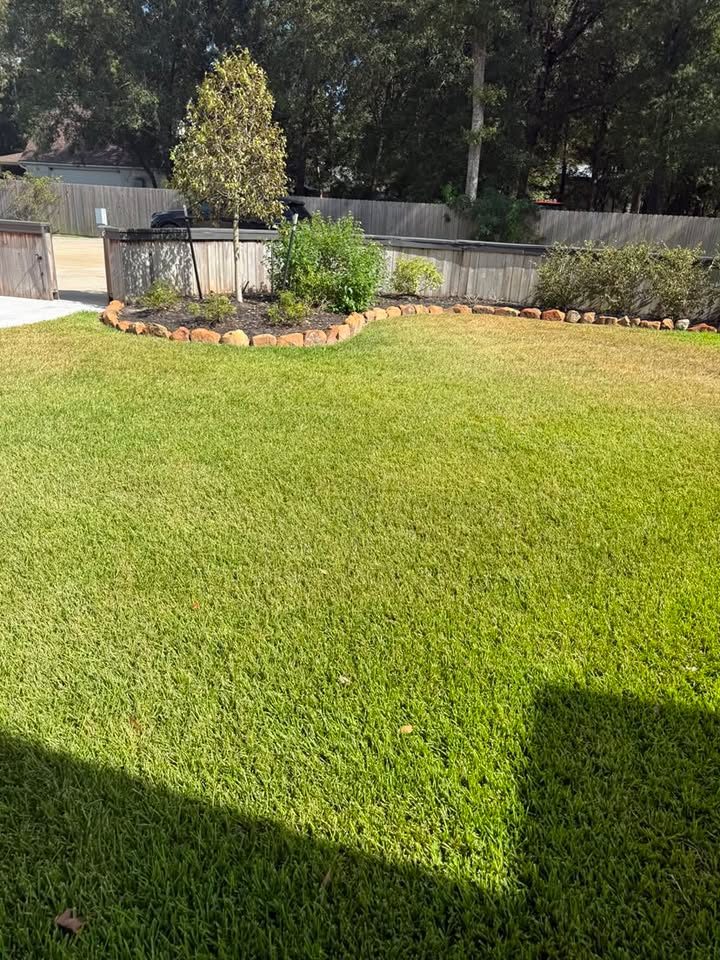
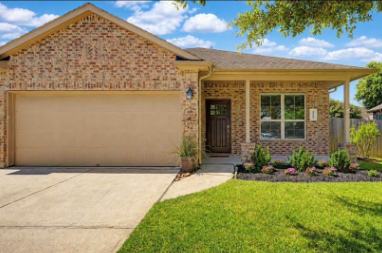
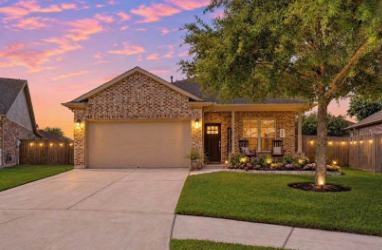
Landscaping Around the Home
Frequently Asked Questions
How much does landscaping cost in Cleveland, TX?
It depends on the size of the project and the plants and materials you choose. Call or text (281) 659-4070 and we'll give you a free estimate with honest numbers.
Can you refresh my existing beds without a full redo?
Yes — cleanout, re-edge, replace what's dead and top with fresh mulch. It's the most affordable way to transform curb appeal.
What plants work best in this area?
Heat-tough, Gulf Coast-friendly choices — we'll recommend plants that match your sun, shade and watering habits so you're not replacing them next summer.
Do you haul away the debris?
Always. Old plants, weeds and bed waste leave with us the same day.
More Ways We Can Help
How a landscaping job actually runs
Landscaping covers a lot of ground, so it helps to be concrete about what we do and how it gets priced.
Bed design and planting. Laying out beds that make sense for the house, choosing plants for the light and soil they will actually live in, and installing them properly. The most common failure we fix is a bed planted with whatever the builder had on the truck — sun plants in shade, plants that outgrow the space in two seasons, and nothing accounting for how much water Greater Houston actually gets.
Plant selection for this climate. Heat, humidity, clay or sand depending on where you are, and a growing season that runs most of the year. Natives and adapted varieties survive here with far less intervention than the nursery favorites that look good in April and die in August.
Drainage. On the clay yards around Cleveland, Conroe and Willis this is often the real problem behind whatever you called about. Grading, drains and bed placement solve more landscaping complaints than plant choice does.
Phasing. Larger projects do not have to happen at once. Beds and drainage first, planting second, hardscape when you are ready. We would rather do it in stages you can afford than talk you into one number you regret.
Every job starts with a walk and a written scope. No surprises at the end.
Plants that actually survive a Greater Houston summer
The most expensive landscaping mistake is buying what looks good in an April nursery and finding out in August that it was never going to make it here.
What handles our heat and humidity. Natives and long-adapted varieties do the heavy lifting: yaupon holly, dwarf yaupon, wax myrtle, Texas sage, muhly grass, lantana, salvia, esperanza and Turk's cap all handle Gulf Coast summers without constant intervention. Crape myrtle is a workhorse for a reason.
Shade beds. Under the canopy in The Woodlands, Porter or older Conroe neighborhoods, the answer is not sun plants placed hopefully. Cast iron plant, holly fern, liriope and Japanese yew hold up in genuine shade where turf will not.
Drainage-tolerant. On heavy clay that holds water after a storm, plants that resent wet feet will rot at the root regardless of how well they were planted. That constraint has to drive the selection.
Right plant, right size. The other common failure is planting something that will be eight feet wide in front of a window. Knowing the mature size matters more than how it looks in the pot.
Mulch and edging finish it. A well-chosen bed with no edge and no mulch still reads as unfinished. Those are not extras, they are the last step.
Landscaping across Greater Houston, city by city
The Woodlands, Porter and Magnolia live under pine canopy with acidic soil. Shade-tolerant selections — cast iron plant, holly fern, liriope, Japanese yew — do what sun plants cannot, and a lot of the best work here is accepting the shade rather than fighting it.
Cleveland, Conroe and Willis sit on expansive clay that swells and shrinks with the season. Drainage is usually the real problem behind whatever the call was about, and grading plus bed placement solves more complaints than plant selection does. Plants that resent wet feet will rot regardless of how well they were installed.
Humble and Atascocita sand is the reverse: fast-draining, dries hard in August, and wants selections that tolerate it plus deeper mulch to hold moisture.
New Caney and newer Houston subdivisions are mostly the second wave of landscaping — builder beds planted with whatever was on the truck, now old enough that redoing them properly is worth more than maintaining a bad design.
Inside the loop the constraint is space. Small lots reward tight, intentional planting over volume, and mature size matters more than anything, because an eight-foot shrub in front of a window is the most common regret.
Larger jobs can phase — drainage and beds first, planting second, hardscape when you are ready.
Other things people ask
Do you do design, or just installation?
Both, at a practical level. We are not landscape architects and will not pretend to be — for a large architectural project you want one. For laying out beds that suit the house, choosing plants that will live where you are putting them, and installing it properly, that is what we do.
Can we do this in phases?
Yes, and often you should. Drainage and beds first, planting second, hardscape when the budget is ready. We would rather do it in stages you can afford than talk you into one number you regret.
Do you guarantee the plants?
We install properly and we choose plants that suit the light, soil and drainage you actually have. What happens after that depends heavily on watering, which we do not control. We will be straight with you about that up front rather than making a promise we cannot keep.
What is the most common mistake you fix?
Plants in the wrong light, and plants that will be twice the size of the space in three years. Both are avoidable with ten minutes of thought before anything gets planted.
Watering, and why most landscaping fails in year one
We install the plants. What keeps them alive is water, and in Greater Houston that is less obvious than it sounds.
New plantings need different water than established ones. For the first six to eight weeks, a new plant is living off a root ball the size of the pot it came in. Watering the bed lightly does nothing for it — the water spreads through the mulch and surrounding soil while the root ball stays dry. New plants need water directed at the base, deeply, less often.
Deep and infrequent beats shallow and daily. Shallow watering trains roots to stay near the surface where they cook in August. A long soak twice a week builds roots that reach down and survive.
Sprinklers designed for turf do not water beds properly. This is the most common failure we see. A system set for St. Augustine runs for eight minutes, which is fine for grass and useless for a shrub. Beds want drip or a separate zone.
Clay versus sand changes everything. On the clay around Cleveland and Conroe, water sits — overwatering rots roots faster than drought kills them. On the sand around Humble, water is gone in an hour and the same schedule leaves plants thirsty.
Rain does not mean skip. A half-inch shower wets the mulch and not much else. Check the soil, not the sky.
We will walk your system with you and say plainly what needs changing. It costs nothing and it is the difference between a bed that fills in and one you replace next spring.
Landscaping across Greater Houston
Ready for a better-looking yard?
Call or text for a free estimate — discount prices, not discount work.