
Sod Installation — Cleveland, TX & Greater Houston
Sod Installation in Cleveland, TX — free estimates at (281) 659-4070.
Sod Installation in Cleveland, TX
Nothing transforms a property faster than fresh sod. Bare dirt in the morning, a green lawn by dinner. Discount Lawn Maintenance installs sod in Cleveland, TX: ground prepped and graded, fresh-cut sod laid tight with staggered seams, and a straightforward watering plan so it roots instead of dying. From patch repairs to full-yard re-sods, quoted fair and installed right.
New Lawns, Patch Repairs and Full Re-Sods
Sod lives or dies on two things: prep and water. In Cleveland, TX we strip out the dead grass, loosen and grade the soil so roots can take hold, lay the sod tight so seams disappear as it knits, and walk you through exactly how to water it through the first weeks of Texas heat. St. Augustine handles most yards in this area; we'll recommend the right variety for your sun and traffic and tell you the honest square-footage math before you commit.
Instant Lawn, Honest Price
Call or text (281) 659-4070 for a free estimate on sod installation anywhere in Greater Houston or Liberty County.
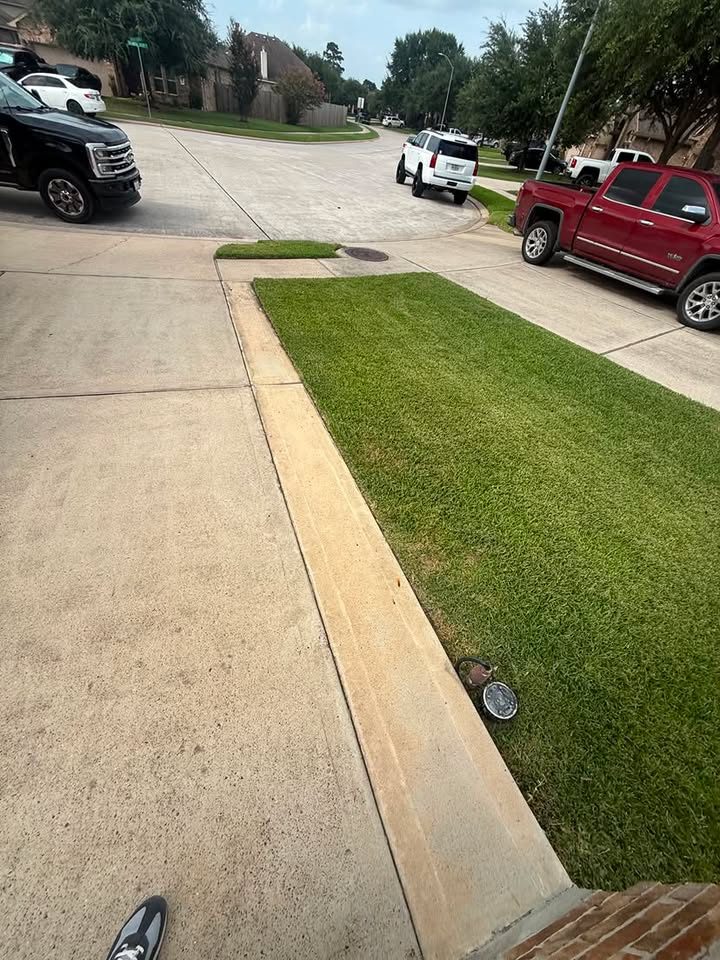
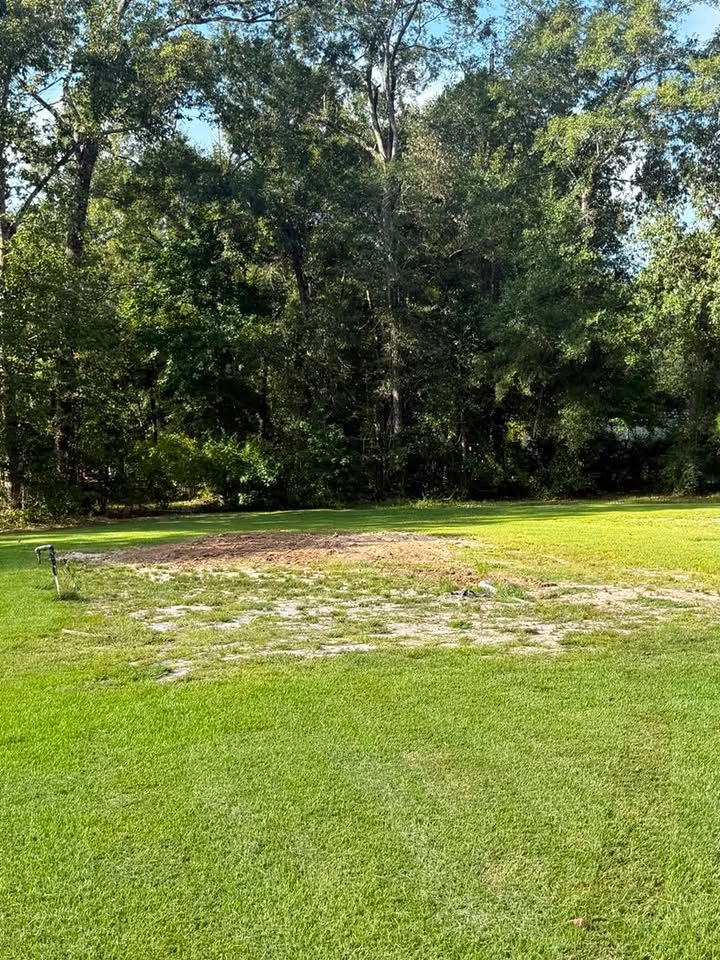
Sod Work In Progress
Frequently Asked Questions
How much does sod installation cost in Cleveland, TX?
It's priced by square footage plus prep work. Call or text (281) 659-4070 with a rough yard size for a free estimate.
What sod is best for this area?
St. Augustine is the go-to for most Gulf Coast yards, with other varieties for full sun or heavy traffic. We'll match the grass to your yard.
Can you fix just the dead spots?
Yes — patch repairs cost far less than a full re-sod, and we blend new pieces into the existing lawn.
How do I water new sod?
Daily at first while it roots, then taper off. You'll get a simple schedule with the install — follow it and the sod takes.
Sod Installation Near You
More Ways We Can Help
Choosing the grass, prepping the ground, and the two weeks that decide it
Pick the right grass for the light you actually have. St. Augustine is the default around Greater Houston because it handles partial shade better than anything else that grows here, and most Houston-area lots have some canopy. Bermuda wants full sun and will thin out badly under trees, but it takes traffic better and cuts lower. Zoysia sits between them, denser and slower-growing, and costs more. If your yard has heavy shade, no sod will thrive there and a bed or ground cover is the honest answer.
Preparation is most of the job. Killing existing weeds and grass, grading so water runs away from the house rather than pooling, breaking up compacted soil, and getting the level right so the new sod sits flush with walks and drives. Sod laid on unprepared ground looks fine for three weeks and then fails.
The first two weeks decide everything. New sod needs water daily, sometimes twice daily in summer heat, until the roots knit into the soil beneath. On the sandy soils around Humble that means more frequent watering, not more water per session. Stay off it. Do not mow until it has rooted — tug a corner, and if it resists, it is ready.
Timing. Spring and early fall are ideal. Sod can go down in Houston summer but the watering demand is significant and the margin for error is small.
What the quote covers and what to check against another
Sod quotes vary wildly and it is almost always because they cover different amounts of preparation. Here is what to compare.
Is old turf removal included? Laying new sod over dead grass or on top of existing turf does not work. It has to be killed and stripped, and that is real labor.
What is the grading plan? If the yard holds water now, new sod will not fix it — it will drown in the same low spot. Grading so water moves away from the house is part of a proper job.
Is soil prep included? Compacted clay needs breaking up, and thin builder topsoil often needs amending. Sod rooted into two inches of dirt over hardpan will struggle every summer.
What variety, and from where? Freshness matters. Sod cut and delivered within a day or two roots far better than pallets that have been sitting.
Is the first watering explained? Anyone who hands you sod without telling you the two-week watering schedule has set you up to fail and will blame the grass.
Square footage. Measure it, or make sure they did. Sod is priced per square foot or per pallet, and a guessed number is where quotes drift.
Sod across Greater Houston, city by city
Where the yard is changes both the grass choice and the watering plan.
The Woodlands, Porter and shaded Conroe are canopy properties, and St. Augustine is the only common choice with real shade tolerance. Even so, there is a point past which no sod will hold, and we would rather tell you that at the walk than lay it twice. Under deep permanent canopy, a bed or ground cover is the answer.
Humble and Atascocita sand drains fast, so new sod there needs watering more often — not more water per session, more sessions. Getting that wrong in the first two weeks is the most common failure on sandy soil.
Cleveland, Conroe and Willis clay is the opposite problem. It compacts, and it holds water in low spots. Grading and breaking up compaction before laying is most of the job, and skipping it is why sod fails there in year two.
New Caney new builds are typically graded fill with thin topsoil over hardpan. Amending that before laying makes the difference between turf that roots and turf that struggles every summer.
Houston and Magnolia full-sun lots open up bermuda and zoysia as real options alongside St. Augustine, with different cut heights and traffic tolerance.
Spring and early fall are the best windows anywhere in the area.
Other things people ask
How soon can I walk on new sod?
Stay off it for the first two weeks beyond what watering requires. Foot traffic before the roots knit shifts the pieces and leaves gaps that take a season to close.
When can I mow it?
Once it resists a gentle tug at a corner, usually two to three weeks. Cut high on the first mow and make sure the blade is sharp — a dull blade will pull unrooted sod right out of the ground.
What if some pieces die?
Some edge browning in the first weeks is normal and usually recovers with water. Whole pieces failing usually points to a watering gap or a drainage problem underneath, and we would rather diagnose that than just replace sod into the same conditions.
Can I lay sod in the middle of summer?
You can, and people do, but the watering demand is high and the margin for error is small. Spring and early fall are genuinely better. If it has to be summer, we will be direct about what the watering schedule requires.
The first month, week by week
Sod succeeds or fails in the first month, and almost all of that is watering. Here is the actual schedule.
Days one to seven. Water daily. In summer heat, twice daily — morning and mid-afternoon. The goal is to keep both the sod and the soil beneath it consistently moist, not soaked. Lift a corner: the soil under it should be damp, not muddy and not dry. Stay off the lawn entirely except to move sprinklers.
Days eight to fourteen. Back off to about every other day, but water longer each time. You are training roots downward now. On the sandy soils around Humble, hold closer to daily for a few extra days because the water leaves faster.
Week three. Test it — tug a corner. If it resists, the roots have taken. Drop to about twice a week with deep soaks. First mow can happen now: cut high, sharp blade, and do not remove more than a third.
Week four onward. Transition to a normal deep-and-infrequent schedule, roughly an inch of water a week including rain, delivered in one or two long soaks rather than daily sprinkles.
Common failure signs. Edges browning and curling means not enough water. A spongy, sour-smelling lawn that has not rooted means too much. Whole pieces dying in one area usually means a drainage problem underneath rather than a sod problem.
We walk you through this at install rather than handing you pallets and hoping.
Sod Installation across Greater Houston
Ready for a better-looking yard?
Call or text for a free estimate — discount prices, not discount work.